

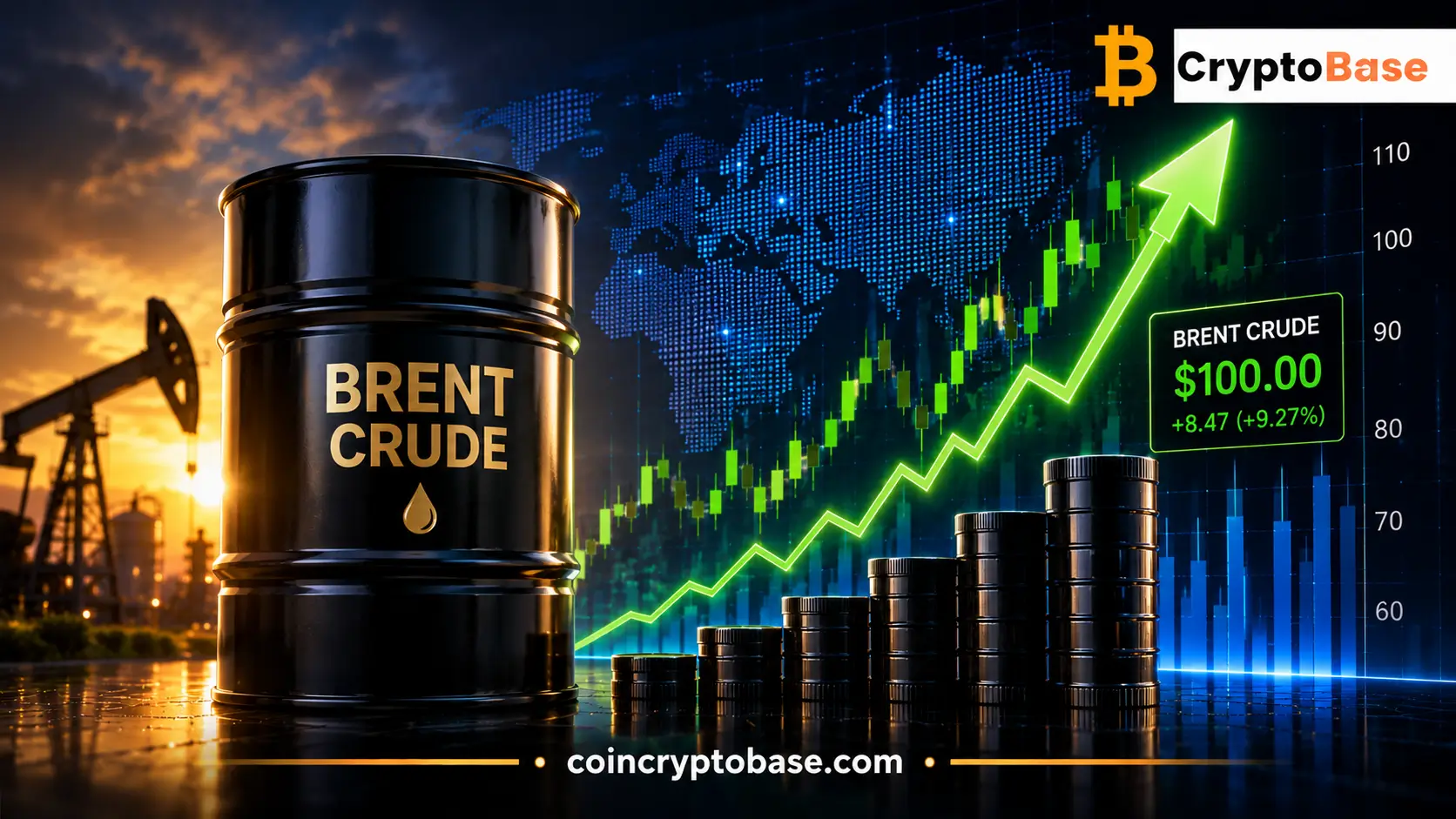
The global oil market is once again on edge as Brent Crude prices have dramatically surged by 5%, breaching the critical $100 per barrel mark. This abrupt spike follows a stark warning from US President Donald Trump, who threatened a “massive attack” in response to escalating geopolitical tensions. The declaration has sent shockwaves through energy markets, signaling a potential new era of volatility and economic uncertainty.
Geopolitical Tensions Ignite Oil Markets: Trump’s Threat Explained
President Trump’s recent threat of a “massive attack” has acted as a direct catalyst for the sudden increase in Brent Crude prices. While the specific target and nature of the potential attack remain ambiguous, the rhetoric alone has been sufficient to trigger immediate market reactions. Such high-stakes geopolitical posturing often leads investors to price in a “risk premium” on commodities, especially oil, due to fears of supply disruptions in key producing regions. This directly impacts the stability of global energy supply chains.
Understanding the 5% Surge: Why Oil Reacts So Drastically
The 5% jump in Brent Crude oil prices to $100 isn’t merely a statistical anomaly; it reflects the extreme sensitivity of global energy markets to political instability. Oil is traded globally, and any perceived threat to its supply or transportation routes can trigger rapid price movements. Traders and investors anticipate potential disruptions, leading to increased demand and speculation, which in turn drives up prices. This phenomenon underscores oil’s role as a barometer for geopolitical health.
The $100 Threshold: What it Means for the Global Economy
Crossing the $100 per barrel threshold for Brent Crude is a significant psychological and economic marker. Historically, oil prices at this level have often preceded periods of economic stress. For consumers, it translates to higher costs at the pump and increased prices for goods and services due to elevated transportation and manufacturing expenses. Businesses, especially those reliant on fossil fuels, face squeezed profit margins, potentially leading to reduced investment and hiring. The implications ripple across every sector, from aviation to agriculture.
Impact on Consumers and Businesses: Navigating Higher Energy Costs
The immediate and widespread impact of surging oil prices is felt by both consumers and businesses. Households will likely experience increased utility bills and higher travel costs. Industries, particularly manufacturing, logistics, and airlines, will grapple with escalating operational expenses. Small and medium-sized enterprises (SMEs) might find it particularly challenging to absorb these additional costs, potentially leading to price increases for their products and services, or even business contraction. Supply chains, already fragile, could face further strain.
Investor Strategies: Hedging Against Oil Price Volatility
In this volatile environment, investors are actively seeking strategies to hedge against the inherent risks of fluctuating oil prices. This includes diversifying portfolios, investing in renewable energy sources, and utilizing financial instruments like oil futures and options. Understanding market indicators and geopolitical developments becomes paramount for making informed investment decisions. The current climate emphasizes the importance of risk management in commodity trading.
Future Outlook: Will Brent Crude Stabilize or Climb Higher?
The future trajectory of Brent Crude oil prices remains highly uncertain. Much depends on the de-escalation or intensification of geopolitical tensions, particularly regarding President Trump’s “massive attack” threat. Supply-side responses from OPEC+ nations and global demand trends will also play crucial roles. Analysts are divided, with some predicting further increases if tensions escalate, while others foresee a potential stabilization if diplomatic efforts prevail. Monitoring these factors is crucial for anticipating market movements.
FAQs
Q1: Why did Brent Crude oil prices jump?
A1: Prices surged 5% due to President Trump’s “massive attack” threat, causing geopolitical uncertainty.
Q2: What is Brent Crude oil?
A2: Brent Crude is a major trading classification of sweet light crude oil that serves as a benchmark price for purchases of oil worldwide.
Q3: How do high oil prices affect consumers?
A3: Consumers face higher fuel costs, increased prices for goods, and potentially higher utility bills.
Q4: What does $100 oil signify?
A4: It’s a significant economic benchmark often associated with inflationary pressures and potential economic slowdowns.
Q5: Will oil prices go higher?
A5: The future depends on geopolitical developments and global supply-demand dynamics; volatility is expected.