

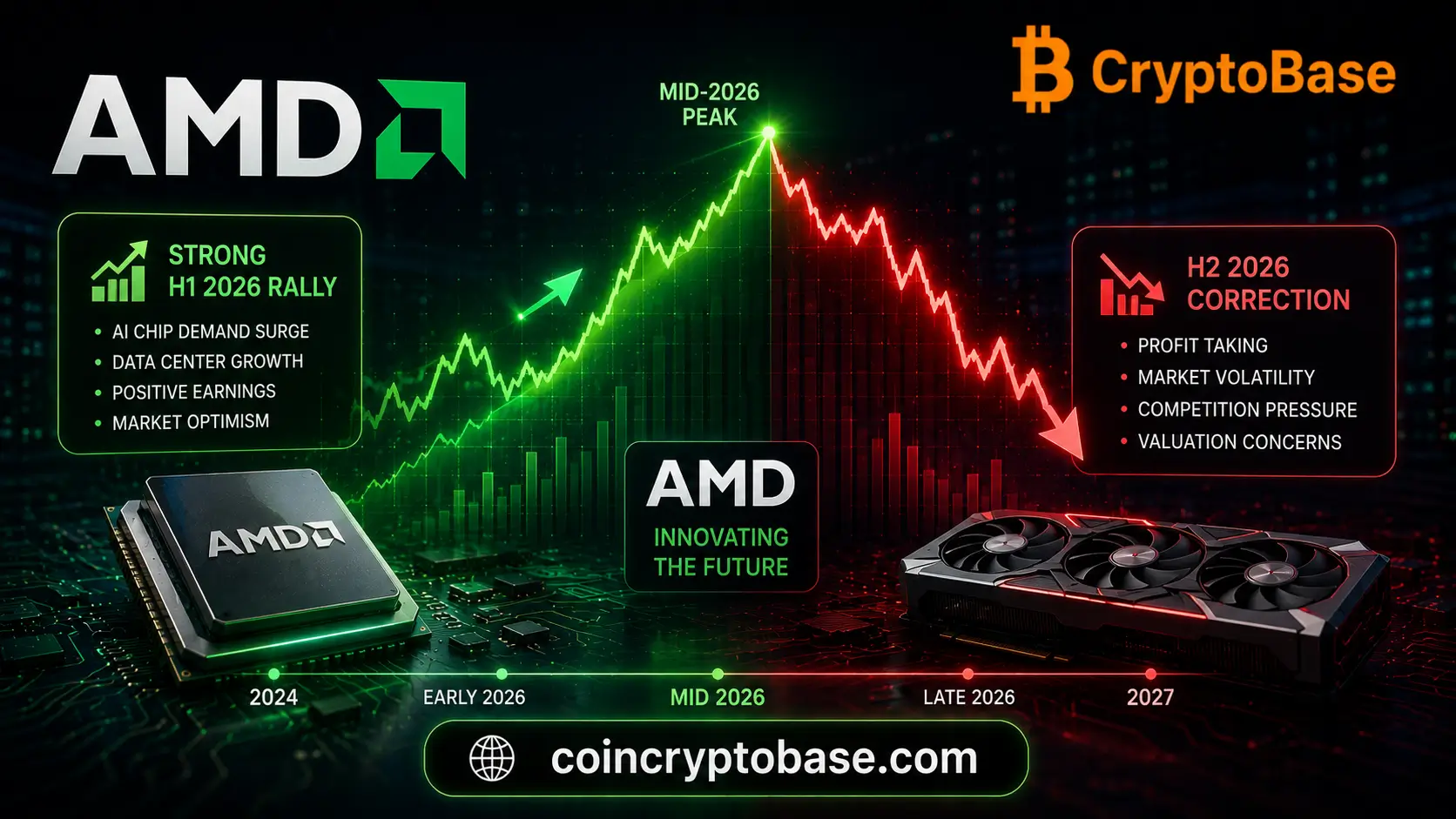
Advanced Micro Devices, Inc. (AMD) has long been a titan in the semiconductor industry, continually pushing boundaries in processors, graphics cards, and high-performance computing. As investors witnessed a dramatic surge to an unprecedented $580 on June 30, 2026, followed by a swift correction to around $516 in July, understanding the underlying dynamics becomes crucial. This blog post delves into the factors that propelled AMD to its mid-2026 peak and explores the reasons behind its subsequent recalibration, offering vital insights for current and prospective investors.
AMD’s Ascent: Unpacking the $580 June Peak
The exhilarating climb of AMD stock to $580 by the end of June 2026 was not without significant catalysts. Market analysts pointed to several key drivers. Robust demand for AMD’s cutting-edge AI accelerators and server CPUs, critical components in the rapidly expanding artificial intelligence landscape, played a pivotal role. Major design wins with hyperscale cloud providers, coupled with strong earnings reports exceeding analyst expectations, fueled investor optimism. Speculation around new product announcements, particularly in the competitive data center and gaming segments, also contributed to the bullish sentiment, pushing the stock to new all-time highs as confidence in AMD’s long-term growth trajectory intensified.
Decoding the July Dip: Why AMD Pulled Back to $516
Following its stratospheric rise, AMD experienced a natural, albeit sharp, correction, settling around $516 in July. This pullback can be attributed to a confluence of factors. A primary reason was undoubtedly profit-taking by early investors and institutional funds capitalizing on the substantial gains. Broader market volatility, perhaps triggered by macroeconomic concerns such as rising interest rates or inflation fears, could have also led to a general risk-off sentiment affecting growth stocks. Furthermore, increased competitive pressures from rivals, minor delays in projected product rollouts, or even revised analyst ratings might have contributed to a tempering of investor enthusiasm, prompting a healthy re-evaluation of its valuation metrics after the rapid surge.
Beyond the Numbers: Market Dynamics and Investor Sentiment
The mid-2026 stock movement of AMD perfectly illustrates the often-unpredictable interplay between fundamental company performance, broader market dynamics, and investor psychology. While AMD’s core business fundamentals remained strong, the initial surge to $580 likely incorporated a degree of speculative fervor. The subsequent correction, rather than signaling a fundamental weakness, often represents a market mechanism to normalize valuations after periods of aggressive growth. Understanding this ebb and flow is key for long-term investors, as stock prices don’t always perfectly mirror intrinsic value in the short term, especially in a fast-moving sector like semiconductors.
What’s Next for AMD? Navigating Future Volatility
Looking ahead, AMD’s trajectory will continue to be influenced by its innovation pipeline, execution in key growth markets (AI, data centers, gaming), and the overall health of the global economy. While short-term volatility is inherent in high-growth tech stocks, AMD’s strategic positioning in critical future technologies provides a compelling long-term narrative. Investors should monitor quarterly earnings, product roadmaps, competitive landscape shifts, and macroeconomic indicators. Diversification and a long-term investment horizon remain crucial strategies for navigating the potential ups and downs of a dynamic stock like AMD.
Strategic Insights for AMD Investors
The AMD stock journey from $580 to $516 within a month offers valuable lessons. It underscores the importance of not just identifying growth companies but also understanding market cycles and valuation. While chasing peaks can be tempting, recognizing when a stock might be overextended and anticipating potential corrections is vital. For those committed to AMD’s long-term potential, such pullbacks can represent buying opportunities, provided the underlying fundamentals remain robust. Thorough due diligence, staying informed, and maintaining a disciplined investment approach are paramount when dealing with high-growth, high-volatility assets like AMD.
FAQs
1. What caused AMD’s stock to hit $580 in June 2026?
Strong AI demand, server CPU growth, major design wins, and positive earnings fueled the surge.
2. Why did AMD’s stock fall to $516 in July 2026?
Profit-taking, broader market volatility, competitive pressures, and valuation recalibration contributed to the dip.
3. Is AMD still a good investment after this volatility?
Its long-term potential remains strong due to innovation in AI and data centers, but investors should consider their risk tolerance.
4. What factors influence AMD’s stock price?
Earnings, product launches, AI market demand, competition, and overall tech market sentiment are key factors.
5. How do market corrections impact tech stocks like AMD?
Corrections can lead to significant price drops, often due to profit-taking or broader economic concerns, even for fundamentally strong companies.








 has long been a titan in the semiconductor industry, continually pushing boundaries in processors.)