

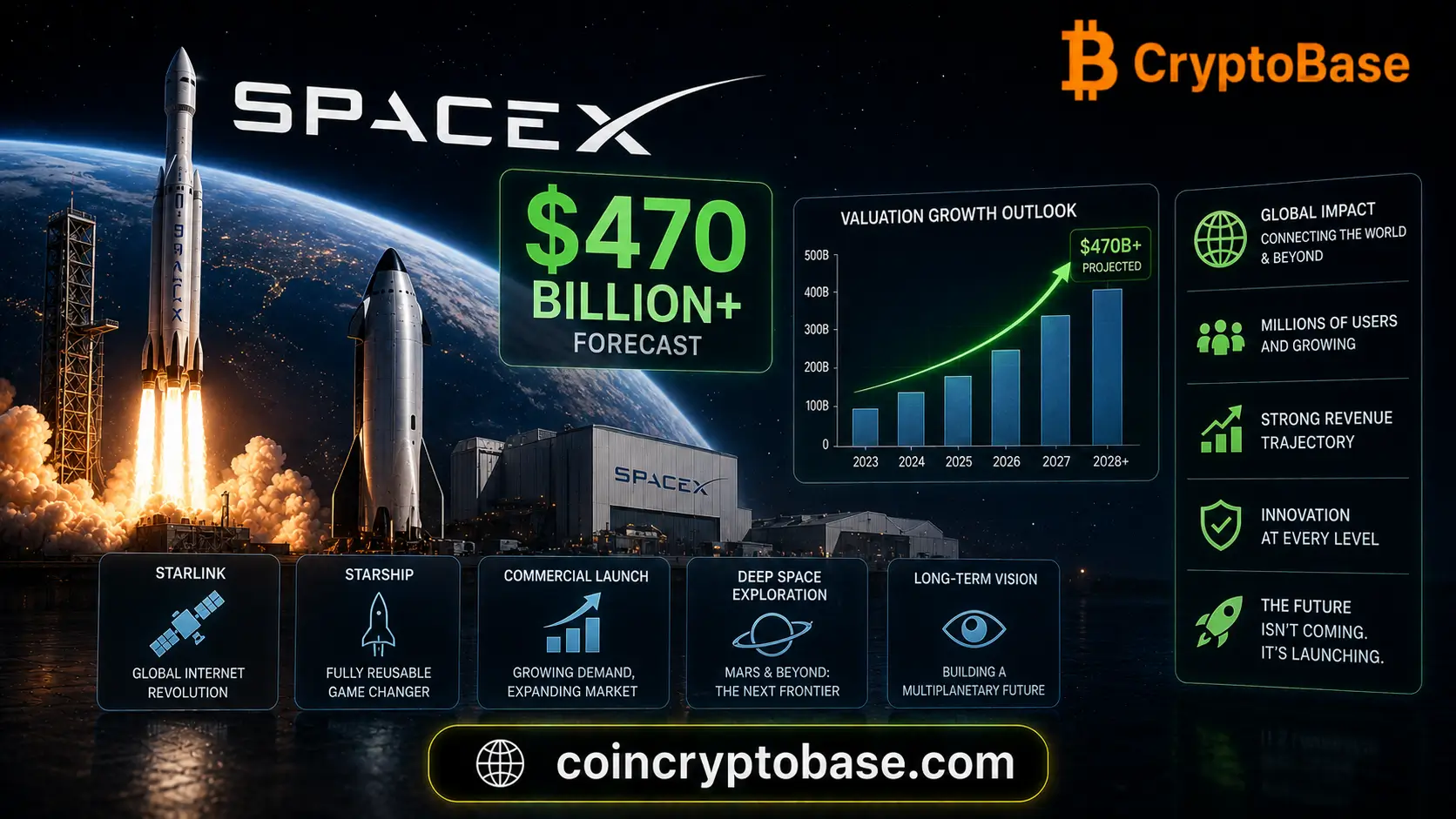
Every SpaceX 10-year forecast circulating right now lands somewhere on a pretty wild scale, from around $470 billion… and potentially much, much higher. These audacious projections aren’t just numbers; they represent a bold vision for humanity’s expansion into space and a fundamental shift in our global economy. But what exactly underpins such an astronomical valuation, and how realistic are these ambitious targets? Let’s dive deep into the forces driving SpaceX’s projected decade of unprecedented growth and transformation.
Unpacking SpaceX’s Monumental 10-Year Forecast
The whispers of a $470 billion, or even a trillion-dollar, valuation for SpaceX by 2030 might seem like science fiction, yet they stem from tangible, rapidly developing technologies and market dominance. This isn’t just about launching rockets; it’s about creating entirely new industries, connecting the unconnected, and making humanity a multi-planetary species. Understanding this forecast requires looking beyond traditional metrics and embracing the disruptive potential of Elon Musk’s aerospace powerhouse.
Starlink: The Internet Backbone of Tomorrow’s Space Economy
A significant portion of SpaceX’s future valuation hinges on Starlink, its rapidly expanding satellite internet constellation. With thousands of satellites already in orbit, Starlink is poised to revolutionize global internet access, especially in underserved rural and remote areas. Its potential for recurring revenue, scalability, and strategic importance in a connected world makes it a cornerstone of SpaceX’s financial projections. As Starlink expands its user base and services (including enterprise and government), its contribution to the overall valuation will only soar.
Starship and Mars: Redefining Human Exploration and Transport
Beyond internet, Starship represents SpaceX’s most ambitious endeavor: a fully reusable launch and landing system designed for cargo and human transport to the Moon, Mars, and beyond. This colossal vehicle isn’t just a rocket; it’s the key to making humanity a multi-planetary species. The long-term vision of Mars colonization, lunar bases, and even ultra-fast point-to-point travel on Earth could unlock trillions in economic activity, fundamentally altering transportation and exploration paradigms.
Dominating the Commercial Launch Market and Beyond
Even without Starlink and Starship fully mature, SpaceX already dominates the commercial launch market with its highly reliable and cost-effective Falcon 9 and Falcon Heavy rockets. This market leadership is expected to continue, fueled by the ever-growing demand for satellite deployment for various sectors, including Earth observation, communication, and scientific research. As launch costs decrease further, more innovative applications for space will emerge, solidifying SpaceX’s position as the leading space logistics provider.
Navigating the Challenges: Risks and Regulatory Hurdles
Despite the glowing forecasts, SpaceX faces significant challenges. The technological hurdles for Starship’s full development and operationalization are immense. Competition from established aerospace giants and emerging private space companies is intensifying. Regulatory complexities, especially concerning orbital debris, spectrum allocation, and international space law, also pose significant risks. Securing consistent funding for such capital-intensive projects, while mitigating public perception issues, will be crucial for maintaining its trajectory.
The Economic Ripple Effect: A New Era of Space Investment
SpaceX’s ambitious goals aren’t just about its own growth; they are catalyzing an entirely new era of space investment. Its advancements are spurring innovation in countless related industries, from advanced materials and manufacturing to artificial intelligence, robotics, and life support systems. This ripple effect is attracting venture capital and governmental interest, fostering a robust space economy ecosystem that extends far beyond SpaceX itself, creating new jobs and opportunities globally.
What Does a $470 Billion+ Valuation Truly Mean?
A valuation exceeding $470 billion signifies a company that is not only a leader but a market-maker, capable of creating entirely new economic sectors. It reflects confidence in SpaceX’s unparalleled technological prowess, its ability to execute on extremely ambitious projects, and the vast addressable markets it aims to conquer. It’s a testament to the belief that space — once the exclusive domain of governments — is now the frontier for commercial innovation and human settlement, with SpaceX leading the charge.
FAQs:
Q1: What is the highest projected 10-year forecast for SpaceX?
A1: Some forecasts suggest a valuation exceeding $470 billion, with even higher speculative figures.
Q2: What are the main drivers of SpaceX’s projected growth?
A2: Starlink satellite internet, the Starship rocket system, and continued dominance in commercial launches are key drivers.
Q3: How does Starlink contribute to SpaceX’s valuation?
A3: Starlink is expected to generate massive recurring revenue through global internet service provision.
Q4: What are the biggest challenges SpaceX faces in achieving its goals?
A4: Technological hurdles, intense competition, and complex regulatory environments are major challenges.
Q5: Is SpaceX a publicly traded company?
A5: No, SpaceX is currently a private company, though its valuation is closely watched by investors.