

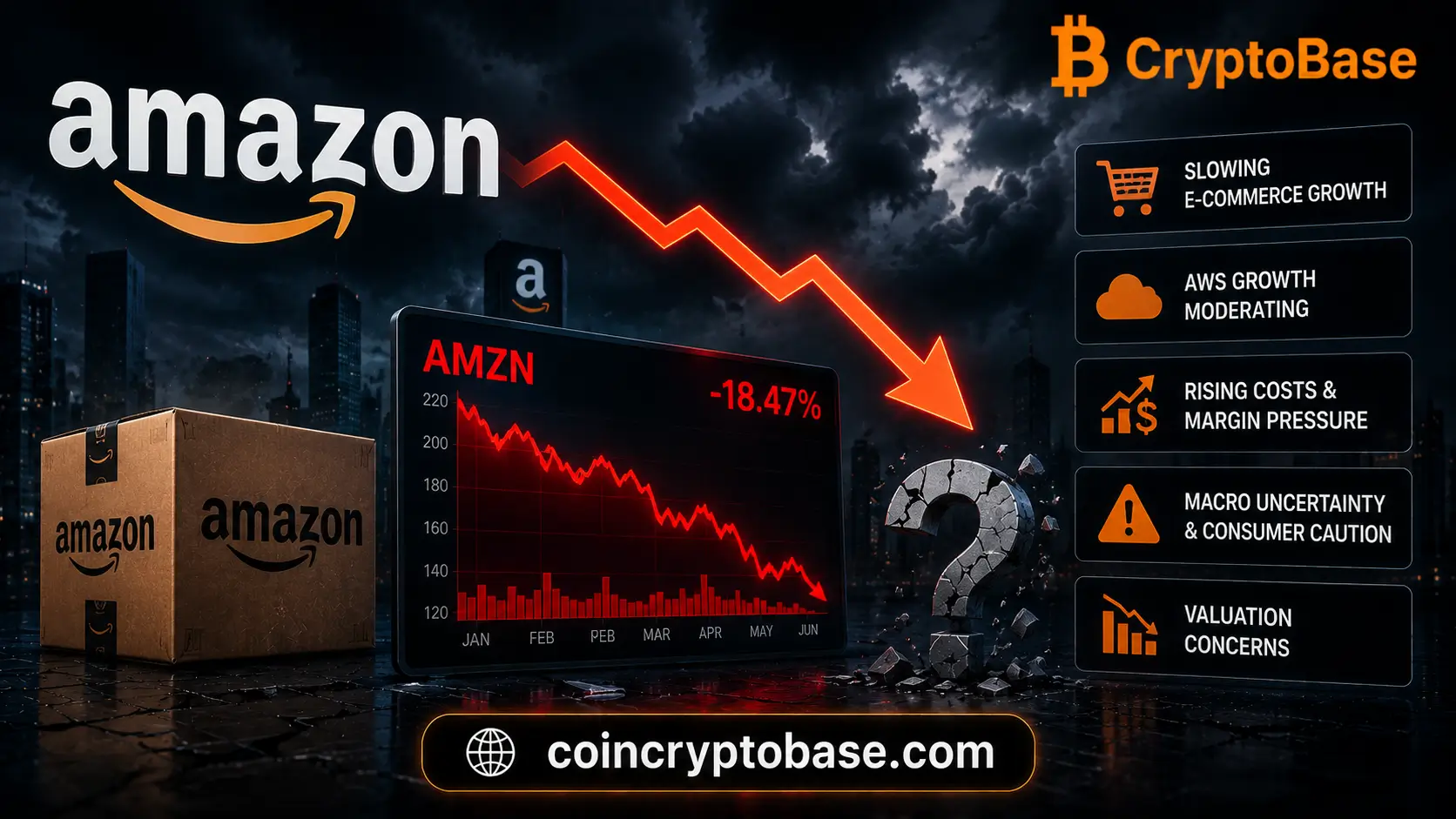
Why Amazon stock keeps going down is the question everyone in the market keeps circling back to. Once an unstoppable force, Amazon (AMZN) has seen its share price tumble, leaving investors puzzled and concerned. Is this a temporary setback, or does it signal deeper issues for the e-commerce and cloud giant? Let’s dive into the multifaceted reasons behind Amazon’s recent stock performance.
Macroeconomic Headwinds: A Broader Economic Chill
The global economic landscape plays a significant role in Amazon’s stock trajectory. High inflation, rising interest rates, and the looming threat of a recession are tightening consumer wallets and increasing operational costs for businesses worldwide. Amazon, with its vast global footprint, is not immune to these pressures. Consumers are becoming more cautious with discretionary spending, directly impacting Amazon’s retail segment, while higher borrowing costs affect its investment and expansion plans.
E-commerce Slowdown: The Post-Pandemic Normalization
During the pandemic, Amazon’s e-commerce business experienced unprecedented growth as lockdowns drove consumers online. However, as economies reopen and consumer habits normalize, this surge has decelerated. People are returning to physical stores and spending more on services and experiences rather than just goods. This shift means slower growth for Amazon’s core online retail, which previously fueled much of its valuation.
AWS Growth Deceleration: Cloud Competition Heats Up
Amazon Web Services (AWS) has long been the company’s profit engine and a key driver of its stock performance. While still a dominant force, AWS has shown signs of growth deceleration. Increased competition from Microsoft Azure and Google Cloud, coupled with enterprises optimizing their cloud spending amidst economic uncertainty, means AWS isn’t growing at the explosive rates seen in previous years. This slowdown impacts Amazon’s overall profitability and investor sentiment.
Increased Operational Costs & Labor Issues: The Price of Scale
Operating a company of Amazon’s immense scale comes with significant costs. Recent years have seen substantial increases in labor expenses, particularly with higher wages and improved benefits for warehouse workers. Supply chain disruptions, rising fuel costs, and investments in logistics infrastructure to maintain rapid delivery speeds have also squeezed profit margins. These elevated operational costs eat into the bottom line, making it harder to impress investors with earnings growth.
Regulatory Scrutiny & Antitrust Concerns: A Looming Shadow
Amazon faces increasing regulatory scrutiny worldwide, particularly regarding its market dominance, labor practices, and treatment of third-party sellers. Antitrust investigations in the US, Europe, and other regions pose a risk of significant fines, forced business changes, or even potential breakups. The uncertainty surrounding these regulatory challenges adds a layer of risk and dampens investor enthusiasm.
Valuation Concerns & Broader Tech Correction: A Market Readjustment
For years, Amazon traded at a premium valuation, justified by its rapid growth and market leadership. However, in the current high-interest-rate environment, investors are re-evaluating high-growth, high-P/E stocks. The broader tech sector has undergone a significant correction, and Amazon is caught in this wave. Investors are now prioritizing profitability and cash flow, leading to a re-calibration of what constitutes a fair valuation for the company.
Conclusion: Navigating the Future
Amazon is navigating a complex period marked by economic challenges, shifting consumer behaviors, and increased regulatory pressure. While the stock’s recent performance has been concerning for many, it’s crucial for investors to consider both short-term headwinds and Amazon’s long-term strengths in e-commerce, cloud computing, and digital advertising. The company’s ability to adapt to these new realities will dictate its path forward.
Frequently Asked Questions About Amazon Stock
Q: Is Amazon stock a good buy now?
A: Investment decisions depend on individual risk tolerance and financial goals. Analysts have mixed views, considering both its challenges and long-term potential.
Q: What factors affect Amazon’s stock price?
A: Key factors include e-commerce growth, AWS performance, macroeconomic conditions, operational costs, and regulatory news.
Q: Has Amazon ever recovered from a stock dip?
A: Yes, Amazon has historically shown resilience and recovered from previous stock downturns, demonstrating its long-term growth trajectory.
Q: What is AWS, and why is it important to Amazon?
A: AWS (Amazon Web Services) is Amazon’s highly profitable cloud computing division, crucial for the company’s overall profitability and growth.
Q: What are the main risks for Amazon stock?
A: Major risks include economic slowdowns, increased competition, rising operational costs, and potential regulatory actions.