

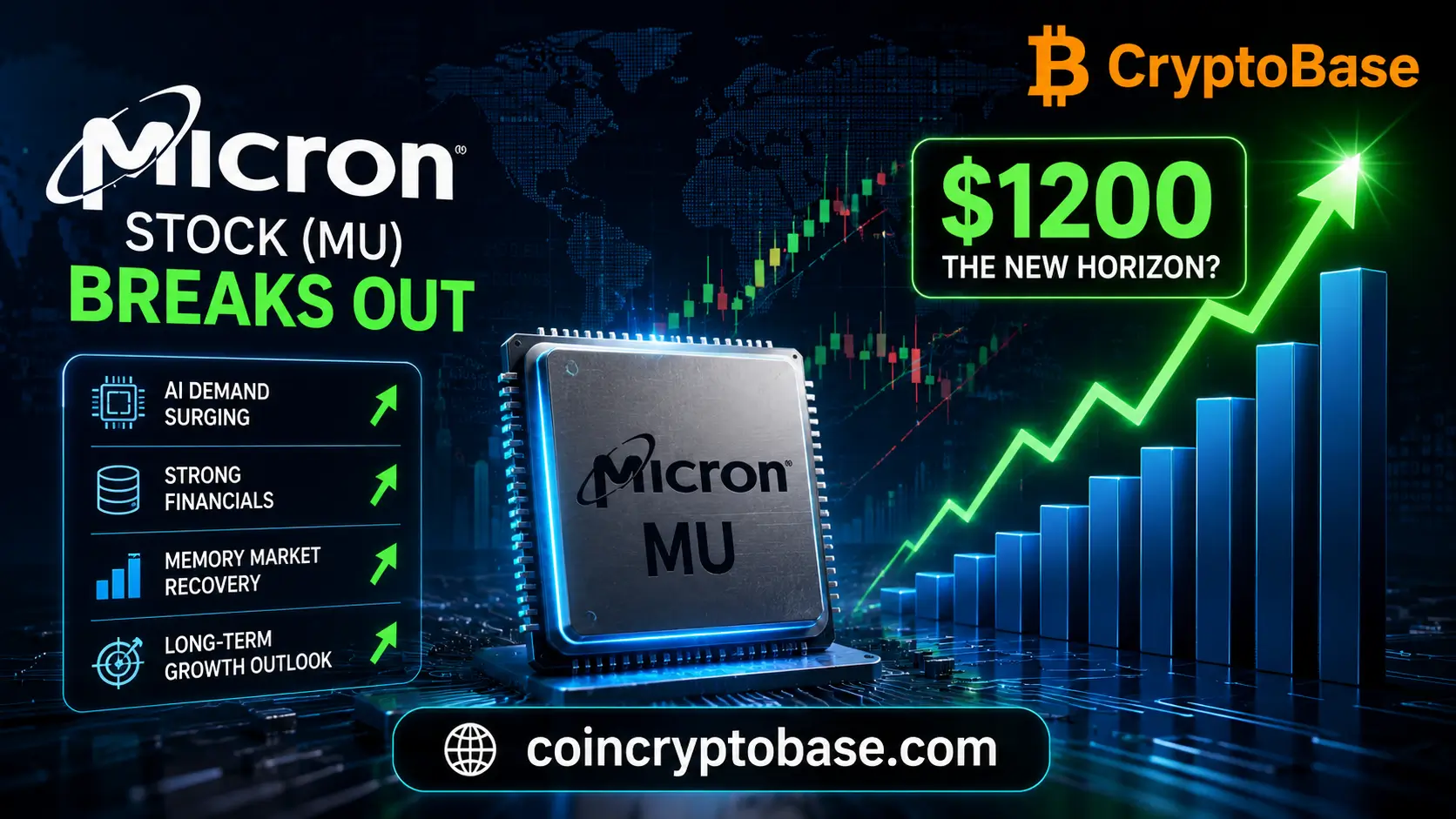
Micron Technology (NASDAQ: MU) kicked off Monday’s trading session at a robust $1,133, immediately signaling strong investor confidence and a clear upward trajectory. The semiconductor giant appears to be on a relentless march, with market watchers keenly observing its race towards the elusive $1,200 mark. This surge isn’t just a fleeting moment; it reflects deeper underlying currents driving the entire tech sector.
Micron’s Explosive Start to the Week
Opening Monday’s session above $1,100, Micron’s stock demonstrated significant buying pressure right from the bell. This initial momentum sets a positive tone for the week, indicating that investors are increasingly bullish on the company’s prospects. The immediate push towards higher valuations underscores a renewed optimism surrounding Micron’s pivotal role in the global technology landscape.
Catalysts Propelling MU Stock Higher
Several powerful catalysts are fueling Micron’s ascent. Chief among them is the insatiable demand for high-performance memory and storage solutions, critical components for artificial intelligence (AI) innovation and expanding data centers. As AI models become more complex and data consumption skyrockets, the need for Micron’s advanced DRAM and NAND products intensifies, directly impacting its revenue and market valuation.
Riding the Wave of Semiconductor Sector Growth
Micron’s performance is intrinsically linked to the broader semiconductor industry, which is currently experiencing a robust growth cycle. Geopolitical shifts, increased digitalization across industries, and the continuous evolution of computing power all contribute to a favorable environment for chipmakers. Micron, as a leader in memory solutions, is uniquely positioned to capitalize on these macro trends.
Financial Strength and Future Outlook for Micron
Beyond market sentiment, Micron’s strong financial fundamentals provide a solid bedrock for its stock performance. Recent earnings reports have often highlighted improving margins, efficient operations, and strategic investments in next-generation technologies. The company’s focus on high-value products, like HBM (High Bandwidth Memory) for AI, promises sustained growth and enhanced profitability.
Analyst Consensus: The Road to $1200 and Beyond
Market analysts have largely maintained a positive outlook on Micron, with many revising their price targets upwards. The consensus suggests that the current rally is sustainable, supported by strong industry tailwinds and Micron’s execution. Reaching $1,200 is seen not just as a possibility, but as a logical progression for a company at the forefront of essential technology.
Understanding Investment Risks and Opportunities
While the outlook for Micron appears bright, investors should always consider potential risks. These include cyclical downturns in the memory market, intense competition, and broader economic headwinds. However, for those with a long-term perspective, Micron offers a compelling opportunity to invest in a company fundamental to the future of computing and AI.
Micron’s Strategic Position in the AI Era
Micron’s strategic investments in advanced manufacturing and product development are solidifying its position as a critical enabler of the AI era. Its innovations in memory technology are not just keeping pace with demand but are actively shaping the capabilities of future AI systems. This forward-looking approach ensures its relevance and growth potential in an ever-evolving tech landscape.
FAQs (Very Short):
Q1: What is Micron’s primary business?
A1: Micron produces memory and storage solutions, primarily DRAM and NAND flash.
Q2: Why is Micron stock currently rising?
A2: Strong demand for AI memory, data centers, and a robust semiconductor market are key drivers.
Q3: Is $1200 a realistic price target for MU?
A3: Many analysts view it as achievable given current market trends and company performance.
Q4: What are the main risks for Micron investors?
A4: Market cyclicality, competition, and economic downturns are potential risks.
Q5: How does AI impact Micron’s growth?
A5: AI demands high-performance memory (like HBM), a crucial product for Micron, driving significant growth.